
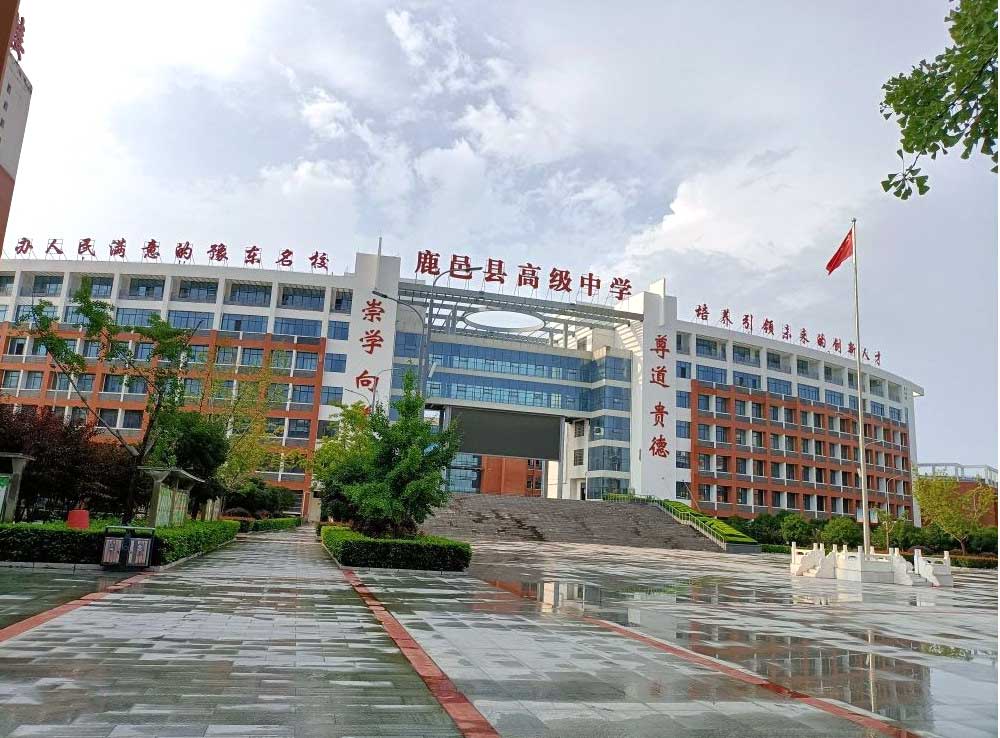
Over 400 AI anti-bullying terminals have been installed at Luyi No.1 High School: High school students no longer remain silent in 'hidden corners'
Luyi County No.1 High School in Henan Province (a provincial model high school with approximately 4,800 students, including more than 3,500 boarding students) has long faced the challenges of hidden, difficult-to-detect, and slow-to-intervene bullying on campus. Our company deployed 416 AI anti-bullying voice alarm terminals in one go, covering all traditional monitoring blind spots such as restrooms, dormitory floors, shower rooms, water dispensers, and library corners. Through AI keyword recognition, one-button assistance, and cloud-based intercom, teachers can respond to bullying incidents within 10 seconds, increasing the proactive warning rate by 90% and successfully preventing more than 60 potential bullying incidents.
Detailed Content
Project Background: The 'Silent Corners' of a Major College Entrance Examination County
Luyi County is a populous and highly competitive county for the college entrance examination in Henan Province. Luyi County No.1 High School (referred to as 'Luyi No.1 High') is the only provincial model high school in the county, with 78 teaching classes and about 4,800 students, including over 3,500 boarding students. The high academic pressure and sensitive psychology of high school students make bullying behavior more concealed—verbal threats in toilets, isolation and exclusion in dormitories, and shoving in water dispensers. Victims often remain silent for fear of affecting their studies or retaliation. By the end of 2024, the school's moral education department conducted an anonymous survey, which showed that 18% of students had experienced or witnessed bullying, with 70% of these incidents occurring in toilets or dormitories; only 12% of the students reported the incidents to teachers. The principal emphasized at a safety meeting, 'We can't wait for students to speak up; we must use technical means to proactively detect bullying.'
Selection and Deployment: Why 416 AI Devices?
After three weeks of on-site investigation and comparison with four suppliers, our company's AI anti-bullying voice alarm terminals were selected due to the following core advantages:
- Local AI voice recognition: Can recognize 15 preset keywords such as 'Help', 'Don't hit me', 'Teacher, come quickly', 'Alarm', 'Stop hitting' without an internet connection, triggering an alarm automatically and allowing students to seek help without pressing a button.
- One-button assistance + two-way intercom: A large red button that connects to the security room, grade director's phone, and the education bureau's monitoring platform within 3 seconds, supporting remote warnings.
- Damage-resistant design: IP65 protection level, resistant to splashing and violent disassembly, suitable for humid environments like toilets and shower rooms.
- High school-specific voice models: Optimized recognition algorithms for common high school student phrases (e.g., 'Don't bully me', 'I want to report to the teacher') to reduce false alarms. A total of 416 devices were deployed, covering all private areas of the school, with the distribution as follows: | Area | Number of Devices | Deployment Details | |------|----------|----------| | Teaching Building Restrooms | 186 | 3 teaching buildings, approximately 210 male and female restroom compartments, with priority deployment on key floors | | Student Dormitory Buildings | 158 | 6 dormitory buildings, covering all corridors, shower rooms, laundry rooms, and water dispensers | | Library and Study Room Corners | 32 | Quiet areas to prevent verbal threats and harassment | | Remote parts of the playground, bicycle sheds | 24 | High-risk areas after school | | Laboratory and Art Building Restrooms | 16 | Areas with low foot traffic but prone to isolation incidents | The system uses a wired + 4G dual-link network to ensure uninterrupted alarms in case of a disconnect. All terminals are connected to the school's Campus Safety Cloud Platform, and the security room is equipped with a 55-inch management screen that automatically displays the location number, floor plan, and real-time intercom window; it also links to the local police station's one-button alarm system.
Key Points of Implementation
- Winter Vacation Construction: During the winter vacation of January-February 2025, 15 construction teams worked simultaneously to install and test all 416 devices, completing the process before the start of school with stress tests.
- Teacher Training: More than 300 faculty members received three levels of training on the anti-bullying system—security staff focused on remote intercom operations, homeroom teachers learned to receive alarms via mobile apps, and subject teachers understood basic operations.
- Student 'Silent Help' Education: Educational videos were played through campus broadcasts and theme class meetings, emphasizing the two methods of seeking help ('Shout for help', 'Press the red button'), with local dialect prompts (Luyi dialect) for students from disadvantaged families.
- Parent Communication: A notice about the intelligent anti-bullying devices was distributed, explaining that the devices do not have cameras, do not violate privacy, and only upload audio when keywords are triggered or the button is pressed, receiving 96% parental support.
Operational Results and Customer Feedback
Three months after deployment (March-May 2025, according to the school's moral education department):
| Indicator | Data |
|---|---|
| Total Alarms Triggered | 187 |
| AI Voice Auto-Triggered | 128 (68%) |
| Students Seeking Help by Button | 59 |
| Average Alarm Response Time | 10 seconds (remote intercom connection) |
| Bullying/Conflicts Successfully Prevented | 62 |
| Of which formally handled by the moral education department | 18 (the rest were verbal conflicts or shoving, resolved remotely) |
| Student Safety Survey (800 samples) | The proportion of students willing to stay in the toilet for a long time increased from 58% to 89% |
| Typical Incidents: |
- Teaching Building Restrooms: A sophomore was surrounded by three people asking for 'smoke money'; he shouted 'Don't hit me', and the device automatically triggered an alarm. The security room immediately warned, 'Teacher has arrived at the east side of the third-floor restroom', and the assailants left quickly. The student later said to his homeroom teacher, 'I thought no one would come; I didn't expect shouting to be effective.'
- Dormitory Building Shower Rooms: After lights were turned off, two seniors had a physical conflict; a classmate pressed the alarm button in the corridor, and a teacher arrived within 2 minutes, preventing a serious violation before the college entrance examination.
- Library Corners: A girl was verbally threatened by a classmate to 'wait for you after school'; the device detected the keywords 'wait' and 'deal with you' and automatically triggered an alarm. The moral education department intervened, preventing a potential off-campus conflict. **Customer Feedback (Luyi County No.1 High School):
'High school is different from elementary and middle school; students have stronger self-esteem and prefer to endure bullying rather than report it. We've tried counseling and campus patrols before, but toilets and dormitories were always blind spots. The biggest change with these AI anti-bullying devices is that someone finally speaks up for the children who were too afraid to. I remember a particularly impactful case: a well-performing, introverted boy who was subjected to long-term emotional and verbal abuse by his roommates. He never told anyone. Once, he shouted 'Don't hit me' in the restroom, and the device triggered an alarm. After we intervened, we learned he had endured it for an entire semester. His father thanked the school for saving his child. This system is not just technology; it's a form of protection for vulnerable students. We plan to deploy it in the other two campuses next semester and continue to collaborate with our company to upgrade the anti-bullying data analysis platform.'